http://www.angeloplessas.com/indexhibitv070e/index.php?/websites/1minuterevolutioncom-2011/
http://www.angeloplessas.com/indexhibitv070e/index.php?/websites/melookingatmecom--2010/
http://www.angeloplessas.com
Dead Letter Office

The United States Postal Service started a dead letter office in 1825 to deal with undeliverable mail. In 2006 approximately 90 million undeliverable-as-addressed (UAA) items ended up in this office; where the rightful owners cannot be identified, the correspondence is destroyed to protect customer privacy, and enclosed items of value are removed. Items of value that cannot be returned are sold at auction, except for pornography and firearms. The auctions also occasionally include items seized by postal inspectors and property being retired from postal service.
http://en.wikipedia.org/wiki/Dead_letter_office


Jack Kerouac

"... the only people for me are the mad ones, the ones who are mad to live, mad to talk, mad to be saved, desirous of everything at the same time, the ones who never yawn or say a commonplace thing, but burn, burn, burn like fabulous yellow roman candles exploding like spiders across the stars and in the middle you see the blue centerlight pop and everybody goes 'Awww!' What did they call such young people in Goethe's Germany?"
"But, outside of being a sweet little girl, she was awfully dumb and capable of doing horrible things."
"They build their own Hells."
"Don't use the phone. People are never ready to answer it. Use poetry."
"You'd be surprised how little I knew even up to yesterday."
"Ray, what you got to do is go climb a mountain..."
"Accept loss forever."
http://en.wikipedia.org/wiki/Jack_Kerouac
Non Serviam
Non serviam is Latin for "I will not serve". The phrase is generally attributed to Lucifer, who is said to have spoken these words to express rejection to serve his God in the heavenly kingdom.
Today "Non serviam" is also used or referred to as motto by a number of political, cultural, and religious groups to express their wish not to conform; it may be used to express a radical view against established common beliefs and organisational structures accepted by the majority.
In James Joyce's A Portrait of the Artist as a Young Man, Father Arnall uses the phrase "Non serviam: I will not serve" to characterize Lucifer's sin, an allusion to Lucifer's assertion of non serviam to God in Milton's Paradise Lost, where the fallen angel Mammon states that it is "Better to reign in hell than serve in heaven". The protagonist Stephen Dedalus later echoes Lucifer in his decision to follow the life of the artist, telling Cranly, "I will not serve that in which I no longer believe whether it call itself my home, my fatherland or my church." Eamonn Hughes maintains that Joyce takes a dialectic approach, both assenting and denying, saying that Steven’s much noted non serviam is qualified - “I will not serve that which I no longer believe…”, and that the non serviam will always be balanced by Stephen’s “I am a servant…” and Molly’s “yes”.
http://en.wikipedia.org/wiki/Non_serviam
Today "Non serviam" is also used or referred to as motto by a number of political, cultural, and religious groups to express their wish not to conform; it may be used to express a radical view against established common beliefs and organisational structures accepted by the majority.
In James Joyce's A Portrait of the Artist as a Young Man, Father Arnall uses the phrase "Non serviam: I will not serve" to characterize Lucifer's sin, an allusion to Lucifer's assertion of non serviam to God in Milton's Paradise Lost, where the fallen angel Mammon states that it is "Better to reign in hell than serve in heaven". The protagonist Stephen Dedalus later echoes Lucifer in his decision to follow the life of the artist, telling Cranly, "I will not serve that in which I no longer believe whether it call itself my home, my fatherland or my church." Eamonn Hughes maintains that Joyce takes a dialectic approach, both assenting and denying, saying that Steven’s much noted non serviam is qualified - “I will not serve that which I no longer believe…”, and that the non serviam will always be balanced by Stephen’s “I am a servant…” and Molly’s “yes”.
http://en.wikipedia.org/wiki/Non_serviam

Ofer Wolberger
Life with Maggie - Le Relais, Issoire, France:
 http://oferwolberger.com/projects/life-with-maggie/1
Covers:
(via http://ilikethisart.net/?p=9079)
http://oferwolberger.com/
Covers:
(via http://ilikethisart.net/?p=9079)
http://oferwolberger.com/
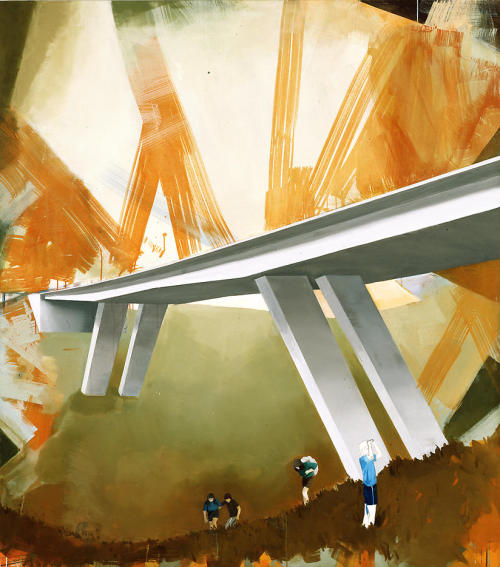

Stan Douglas
Details from Inconsolable Memories, 2005:
http://www.youtube.com/watch?v=KFpX7WuNvb4
Nu•tka•:
http://www.ubu.com/film/douglas_nutka.html
http://en.wikipedia.org/wiki/Stan_Douglas
http://www.youtube.com/watch?v=KFpX7WuNvb4
Nu•tka•:
http://www.ubu.com/film/douglas_nutka.html
http://en.wikipedia.org/wiki/Stan_Douglas

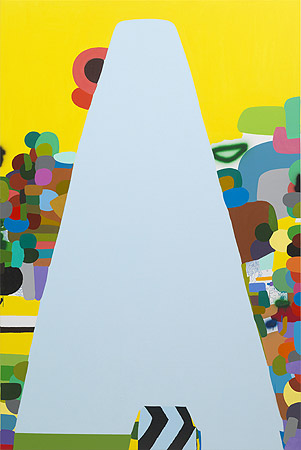
Marcel Duchamp
"I like living, breathing better than working... my art is that of living. Each second, each breath is a work which is inscribed nowhere, which is neither visual nor cerebral, it's a sort of constant euphoria."
http://en.wikipedia.org/wiki/Marcel_Duchamp
http://en.wikipedia.org/wiki/Marcel_Duchamp
Norman McLaren
Synchromy (1971):
http://www.youtube.com/watch?v=Jqz_tx1-xd4
http://re.danielrehn.com/post/3459300197/synchromy-by-norman-mclaren-1971-fusing-music
Lines Horizontal - Lignes Horizontales:
http://www.youtube.com/watch?v=qJwfeG3Mntk
Lignes Verticales | Lines Vertical:
http://www.youtube.com/watch?v=LnbavAYULUU
Spook Sport:
http://www.youtube.com/watch?v=ZnLJqJBVCT4
A Phantasy:
http://www.youtube.com/watch?v=fjl0i_p_pow
Canon:
http://www.youtube.com/watch?v=MRXNcrGkr4Y
Boogie Doodle:
http://www.youtube.com/watch?v=TgJ-yOhpYIM
http://en.wikipedia.org/wiki/Norman_McLaren
http://www.youtube.com/watch?v=Jqz_tx1-xd4
http://re.danielrehn.com/post/3459300197/synchromy-by-norman-mclaren-1971-fusing-music
Lines Horizontal - Lignes Horizontales:
http://www.youtube.com/watch?v=qJwfeG3Mntk
Lignes Verticales | Lines Vertical:
http://www.youtube.com/watch?v=LnbavAYULUU
Spook Sport:
http://www.youtube.com/watch?v=ZnLJqJBVCT4
A Phantasy:
http://www.youtube.com/watch?v=fjl0i_p_pow
Canon:
http://www.youtube.com/watch?v=MRXNcrGkr4Y
Boogie Doodle:
http://www.youtube.com/watch?v=TgJ-yOhpYIM
http://en.wikipedia.org/wiki/Norman_McLaren
Eilis Macdonald
Reflections:
http://eilismcdonald.com/reflection/
Lo-fi - Wi-fi:
http://eilismcdonald.com/lofi-wifi/
Force Quit:
http://eilismcdonald.com/force-quit/
Jst' Chillin':
http://www.jstchillin.org/eilismcdonald/
http://eilismcdonald.com/
http://eilismcdonald.com/reflection/
Lo-fi - Wi-fi:
http://eilismcdonald.com/lofi-wifi/
Force Quit:
http://eilismcdonald.com/force-quit/
Jst' Chillin':
http://www.jstchillin.org/eilismcdonald/
http://eilismcdonald.com/
Francis Ford Coppola
Is it important to veer away from the masters to develop one’s own style?
I once found a little excerpt from Balzac. He speaks about a young writer who stole some of his prose. The thing that almost made me weep, he said, “I was so happy when this young person took from me.” Because that’s what we want. We want you to take from us. We want you, at first, to steal from us, because you can’t steal. You will take what we give you and you will put it in your own voice and that’s how you will find your voice.
And that’s how you begin. And then one day someone will steal from you. And Balzac said that in his book: It makes me so happy because it makes me immortal because I know that 200 years from now there will be people doing things that somehow I am part of. So the answer to your question is: Don’t worry about whether it’s appropriate to borrow or to take or do something like someone you admire because that’s only the first step and you have to take the first step.
How does an aspiring artist bridge the gap between distribution and commerce?
We have to be very clever about those things. You have to remember that it’s only a few hundred years, if that much, that artists are working with money. Artists never got money. Artists had a patron, either the leader of the state or the duke of Weimar or somewhere, or the church, the pope. Or they had another job. I have another job. I make films. No one tells me what to do. But I make the money in the wine industry. You work another job and get up at five in the morning and write your script.
This idea of Metallica or some rock n’ roll singer being rich, that’s not necessarily going to happen anymore. Because, as we enter into a new age, maybe art will be free. Maybe the students are right. They should be able to download music and movies. I’m going to be shot for saying this. But who said art has to cost money? And therefore, who says artists have to make money?
In the old days, 200 years ago, if you were a composer, the only way you could make money was to travel with the orchestra and be the conductor, because then you’d be paid as a musician. There was no recording. There were no record royalties. So I would say, “Try to disconnect the idea of cinema with the idea of making a living and money.” Because there are ways around it.
What is the one thing to keep in mind when making a film?
When you make a movie, always try to discover what the theme of the movie is in one or two words. Every time I made a film, I always knew what I thought the theme was, the core, in one word. In “The Godfather,” it was succession. In “The Conversation,” it was privacy. In “Apocalypse,” it was morality.
The reason it’s important to have this is because most of the time what a director really does is make decisions. All day long: Do you want it to be long hair or short hair? Do you want a dress or pants? Do you want a beard or no beard? There are many times when you don’t know the answer. Knowing what the theme is always helps you.
I remember in “The Conversation,” they brought all these coats to me, and they said: Do you want him to look like a detective, Humphrey Bogart? Do you want him to look like a blah blah blah. I didn’t know, and said the theme is ‘privacy’ and chose the plastic coat you could see through. So knowing the theme helps you make a decision when you’re not sure which way to go.
What’s the best piece of advice you’ve given to your children, inside and outside of the industry?
Always make your work be personal.
And, you never have to lie. If you lie, you will only trip yourself up. You will always get caught in a lie. It is very important for an artist not to lie, and most important is not to lie to yourself. There are some questions that are inappropriate to ask, and rather than lie, I will not answer them because it’s not a question I accept. So many times we are asked things in our work or in life that you want to lie, and all you have to do is say, “No, that is an improper question.”
So when you get into a habit of not lying when you are writing, directing, or making a film, that will carry your personal conviction into your work. And, in a society where you say you are very free but you’re not entirely free, you have to try. There is something we know that’s connected with beauty and truth. There is something ancient. We know that art is about beauty, and therefore it has to be about truth.
You now have all the resources to do your own production, writing, directing. What’s the biggest barrier to being an artist?
Self-confidence always. The artist always battles his own/her own feeling of inadequacy.
How do you overcome that?
I’ve learned an interesting thing. When I was young on a movie set, I would try to stage the scene and the actors would read it, and I said, “Well, you stand here and you sit there, and blah, blah, blah.” They would say, “Well, I don’t think I should sit there, I should stand there. And I don’t think this line is right.” And they would begin to challenge the text.
What I learned, which is a simple idea, is that if you hold out with your vision a little bit, it’s like a cake being put in the oven. The scene doesn’t work immediately, you have to bake it a little bit. It’s unfair, when you begin to create a shot, say, or a scene, that it’s going to immediately be like those beautiful scenes in the movies. It needs a little bit of time to mature. It’s like taking the cake out without letting it be in the oven for more than a minute. Like, oh no, it’s terrible. So you have to be patient, and then slowly everyone starts to see that the ideas are right, or make the corrections. You have to battle the lack of confidence by giving the scene the chance to solidify.
Do you use that approach in life as well?
Yes, I think. We are very insecure. People are insecure, not just young people. Everyone is insecure. They say that Barbara Streisand, when she goes on, she has a panic attack. She feels she can’t sing. Of course, she can sing. I believe that when you write something, when I write something, I turn it over and I don’t look at it. Because I believe the writer, the young writer, has a hormone that makes them hate what they’ve written. And yet, the next morning, when you look at it, you say, “Oh that’s not bad.” But the first second you hate it.
http://the99percent.com/articles/6973/Francis-Ford-Coppola-On-Risk-Money-Craft-Collaboration
http://en.wikipedia.org/wiki/Francis_Ford_Coppola
I once found a little excerpt from Balzac. He speaks about a young writer who stole some of his prose. The thing that almost made me weep, he said, “I was so happy when this young person took from me.” Because that’s what we want. We want you to take from us. We want you, at first, to steal from us, because you can’t steal. You will take what we give you and you will put it in your own voice and that’s how you will find your voice.
And that’s how you begin. And then one day someone will steal from you. And Balzac said that in his book: It makes me so happy because it makes me immortal because I know that 200 years from now there will be people doing things that somehow I am part of. So the answer to your question is: Don’t worry about whether it’s appropriate to borrow or to take or do something like someone you admire because that’s only the first step and you have to take the first step.
How does an aspiring artist bridge the gap between distribution and commerce?
We have to be very clever about those things. You have to remember that it’s only a few hundred years, if that much, that artists are working with money. Artists never got money. Artists had a patron, either the leader of the state or the duke of Weimar or somewhere, or the church, the pope. Or they had another job. I have another job. I make films. No one tells me what to do. But I make the money in the wine industry. You work another job and get up at five in the morning and write your script.
This idea of Metallica or some rock n’ roll singer being rich, that’s not necessarily going to happen anymore. Because, as we enter into a new age, maybe art will be free. Maybe the students are right. They should be able to download music and movies. I’m going to be shot for saying this. But who said art has to cost money? And therefore, who says artists have to make money?
In the old days, 200 years ago, if you were a composer, the only way you could make money was to travel with the orchestra and be the conductor, because then you’d be paid as a musician. There was no recording. There were no record royalties. So I would say, “Try to disconnect the idea of cinema with the idea of making a living and money.” Because there are ways around it.
What is the one thing to keep in mind when making a film?
When you make a movie, always try to discover what the theme of the movie is in one or two words. Every time I made a film, I always knew what I thought the theme was, the core, in one word. In “The Godfather,” it was succession. In “The Conversation,” it was privacy. In “Apocalypse,” it was morality.
The reason it’s important to have this is because most of the time what a director really does is make decisions. All day long: Do you want it to be long hair or short hair? Do you want a dress or pants? Do you want a beard or no beard? There are many times when you don’t know the answer. Knowing what the theme is always helps you.
I remember in “The Conversation,” they brought all these coats to me, and they said: Do you want him to look like a detective, Humphrey Bogart? Do you want him to look like a blah blah blah. I didn’t know, and said the theme is ‘privacy’ and chose the plastic coat you could see through. So knowing the theme helps you make a decision when you’re not sure which way to go.
What’s the best piece of advice you’ve given to your children, inside and outside of the industry?
Always make your work be personal.
And, you never have to lie. If you lie, you will only trip yourself up. You will always get caught in a lie. It is very important for an artist not to lie, and most important is not to lie to yourself. There are some questions that are inappropriate to ask, and rather than lie, I will not answer them because it’s not a question I accept. So many times we are asked things in our work or in life that you want to lie, and all you have to do is say, “No, that is an improper question.”
So when you get into a habit of not lying when you are writing, directing, or making a film, that will carry your personal conviction into your work. And, in a society where you say you are very free but you’re not entirely free, you have to try. There is something we know that’s connected with beauty and truth. There is something ancient. We know that art is about beauty, and therefore it has to be about truth.
You now have all the resources to do your own production, writing, directing. What’s the biggest barrier to being an artist?
Self-confidence always. The artist always battles his own/her own feeling of inadequacy.
How do you overcome that?
I’ve learned an interesting thing. When I was young on a movie set, I would try to stage the scene and the actors would read it, and I said, “Well, you stand here and you sit there, and blah, blah, blah.” They would say, “Well, I don’t think I should sit there, I should stand there. And I don’t think this line is right.” And they would begin to challenge the text.
What I learned, which is a simple idea, is that if you hold out with your vision a little bit, it’s like a cake being put in the oven. The scene doesn’t work immediately, you have to bake it a little bit. It’s unfair, when you begin to create a shot, say, or a scene, that it’s going to immediately be like those beautiful scenes in the movies. It needs a little bit of time to mature. It’s like taking the cake out without letting it be in the oven for more than a minute. Like, oh no, it’s terrible. So you have to be patient, and then slowly everyone starts to see that the ideas are right, or make the corrections. You have to battle the lack of confidence by giving the scene the chance to solidify.
Do you use that approach in life as well?
Yes, I think. We are very insecure. People are insecure, not just young people. Everyone is insecure. They say that Barbara Streisand, when she goes on, she has a panic attack. She feels she can’t sing. Of course, she can sing. I believe that when you write something, when I write something, I turn it over and I don’t look at it. Because I believe the writer, the young writer, has a hormone that makes them hate what they’ve written. And yet, the next morning, when you look at it, you say, “Oh that’s not bad.” But the first second you hate it.
http://the99percent.com/articles/6973/Francis-Ford-Coppola-On-Risk-Money-Craft-Collaboration
http://en.wikipedia.org/wiki/Francis_Ford_Coppola
Adoniran Barbosa
O Trem das Onze:
http://www.youtube.com/watch?v=ceBdGz3eTFg
http://www.youtube.com/watch?v=6C6ezqRYWug&feature=list_related&playnext=1&list=MLGxdCwVVULXeIPb3NMUthal7-f59anvxU
"João Rubinato, (Valinhos, 6 de agosto de 1910 — São Paulo, 23 de novembro de 1982), mais conhecido como Adoniran Barbosa, foi um compositor, cantor, humorista e ator brasileiro. Rubinato representava em programas de rádio diversos personagens, entre os quais, Adoniran Barbosa, o qual acabou por se confundir com seu criador dada a sua popularidade frente aos demais."
http://pt.wikipedia.org/wiki/Adoniran_Barbosa
 http://pt.wikipedia.org/wiki/Ficheiro:Jacana65AB.jpg
http://www.youtube.com/watch?v=ceBdGz3eTFg
http://www.youtube.com/watch?v=6C6ezqRYWug&feature=list_related&playnext=1&list=MLGxdCwVVULXeIPb3NMUthal7-f59anvxU
"João Rubinato, (Valinhos, 6 de agosto de 1910 — São Paulo, 23 de novembro de 1982), mais conhecido como Adoniran Barbosa, foi um compositor, cantor, humorista e ator brasileiro. Rubinato representava em programas de rádio diversos personagens, entre os quais, Adoniran Barbosa, o qual acabou por se confundir com seu criador dada a sua popularidade frente aos demais."
http://pt.wikipedia.org/wiki/Adoniran_Barbosa


Chris Burden
Metropolis II:
http://www.youtube.com/watch?v=_UQ2vqFJvpA
Samson:
http://www.youtube.com/watch?v=EYg8XJJg3VI
Big Wheel:
http://www.youtube.com/watch?v=7Qi_yaq6o-8
Beam Drop:
http://www.youtube.com/watch?v=MfRIWQwOiyM
Urban Light:
http://www.youtube.com/watch?v=WeNvzQh0-n8
http://www.youtube.com/watch?v=_UQ2vqFJvpA
Samson:
http://www.youtube.com/watch?v=EYg8XJJg3VI
Big Wheel:
http://www.youtube.com/watch?v=7Qi_yaq6o-8
Beam Drop:
http://www.youtube.com/watch?v=MfRIWQwOiyM
Urban Light:
http://www.youtube.com/watch?v=WeNvzQh0-n8
Subscribe to:
Posts (Atom)